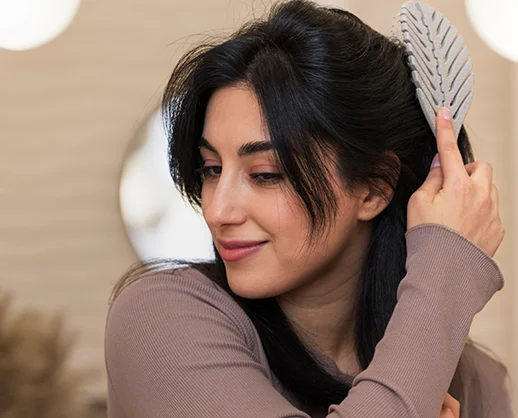
Roots to Radiance: The Science-Backed Hair Ritual with Minoxidil
(Ideal for promoting traditional or Ayurvedic hair care routines.)
Tame the Tangler: Say Goodbye to Frizz with Expert Care and Minoxidil Boost
(Perfect for monsoon or humid season-related posts.)
Bad Hair Day? Tame It with This Minoxidil-Backed Routine
(Click-worthy, relatable, and great for product tie-ins.
Popular Hair Myths
Busted with Science
01
Using Minoxidil Increases Hair Fall
False
Not true! Initial shedding is normal and actually means Minoxidil is starting to work.
Science Says
Minoxidil stimulates the hair follicles by pushing out weak, resting hairs to make way for new, stronger strands. This shedding phase occurs within the first 2–6 weeks and is temporary.
02
Oiling Overnight Works Better Than Minoxidil
False
Not Always. Oils may condition hair, but they can’t stimulate follicles like Minoxidil does. In fact, leaving oil overnight may lead to scalp buildup.
Science Says
Minoxidil is clinically proven to extend the hair growth phase. Oiling overnight might feel soothing, but it doesn’t treat pattern hair loss, Minoxidil does.
03
Once You Start Minoxidil, You Can’t Stop
False
Hair regrown with Minoxidil may shed once discontinued, but you don’t lose more hair than your natural baseline.
Science Says
Minoxidil helps maintain hair growth while in use. If stopped, the hair growth returns to your original state, not extra hair loss.
04
The More Minoxidil You Use, The Faster It Works
Not at all
Overuse doesn’t improve effectiveness and may cause irritation.
Science Says
Studies show that 2% or 5% once or twice daily is optimal. Excess product won’t penetrate deeper instead, it may cause scalp dryness, redness, or itching.
05
Blow Drying Causes Permanent Hair Loss
FALSE
Blow drying on high heat can damage hair strands, but it doesn’t damage the follicle itself.
Science Says
Use a heat protectant and dry on cool or medium settings to avoid breakage without harming growth.
06
Hairfall Means Something’s Wrong
Sometimes
Losing 50–100 strands a day is perfectly normal. Seasonal shedding, stress, or a diet change can temporarily increase hair fall.
Science Says
If hair fall is excessive, patchy, or prolonged, it could signal an underlying health or nutritional issue worth addressing.
07
Natural Remedies Are Always Safe for Hair
False
Not all home remedies are harmless. Some ingredients, like lemon juice or baking soda, can irritate or dry out your scalp.
Science Says
“Natural” doesn’t equal safe. Always do a patch test and research before applying any DIY ingredients to your scalp.
08
Shampooing Every Day Causes Hair Fall
False
Using a mild, sulphate-free shampoo daily won’t cause hair loss. Hair that falls out during washing is already ready to shed.
Visible results take 3–6 months, with initial shedding possible in the first few weeks
Science Says
Hair goes through natural growth cycles. Minoxidil extends the anagen (growth) phase, but this transition takes time. Shedding early on is a sign it’s working.
10
Stress Instantly Makes Your Hair Fall Out
Not Exactly
Hair doesn’t fall out the moment you’re stressed, the effect shows up weeks later.
Science Says
Severe stress can trigger a condition called telogen effluvium, where more hairs shift into the shedding phase which appears 6–12 weeks later and is reversible.
11
Dandruff Means You’re Losing Hair
Misleading
Flakes look alarming, but they’re usually a scalp‑skin issue, not a follicle failure.
Science Says
Dandruff irritates the scalp but doesn’t damage hair follicles. Treating it can reduce itch and minimize breakage from scratching.
12
Hair Fall Means You're Going Bald
Not Always
Not all shedding is the beginning of baldness.
Science Says
Temporary hair fall happens due to stressors like seasons or hormones. Minoxidil helps when hair thinning becomes progressive and patterned.
Bust That Myth
One Scalp Concern at a Time
MYTH: Brushing your hair more often makes it grow faster
FACT: Hair grows from the scalp, not the ends. Over-brushing can lead to breakage, not growth.
MYTH: Hair fall is only a male problem
FACT: Women experience hair loss too, especially due to hormones, stress, or nutritional gaps.
MYTH: Shaving your head stops hair fall
FACT: Hair fall happens at the follicle level; shaving doesn’t stop the root cause.
MYTH: Hair fall means you’re sick
FACT: Losing 50–100 hairs daily is normal. Long-term or patchy loss needs deeper checks.
MYTH: Does Minoxidil Affect Fertility?
FACT: Not true. Topical Minoxidil is absorbed minimally (less than 2%) and doesn’t reach reproductive organs, so it has no known effect on fertility.
MYTH: Minoxidil is only effective in men.
FACT: Minoxidil is FDA-approved and one of the most effective treatments for male pattern baldness.
MYTH: Minoxidil isn’t safe for women.
FACT: Incorrect! Minoxidil can be used by women and works especially well for female pattern hair loss.
MYTH: Expensive products work best
FACT: Price ≠ performance. Look at ingredients, not just the label.
MYTH: You must wash your hair every day
FACT: Daily washing isn’t necessary unless your scalp is oily. Overwashing can dry out your hair.
MYTH: Changing shampoos causes hair fall
FACT: Hair fall during switching is usually a coincidence. Your scalp just needs time to adjust.
MYTH: Air-drying is always better than blow-drying
FACT: Both have pros and cons. Controlled blow-drying with heat protectant is safe.
MYTH: You should stick to one routine forever
FACT: Your hair needs change with seasons, age, and health. Flex your routine!
MYTH: Onion juice cures baldness
FACT: Some users see minor improvements, but there’s no cure-all for baldness.
MYTH: Egg masks make hair grow overnight
FACT: Eggs add protein but don’t speed up growth instantly.
MYTH: Aloe vera fixes all scalp problems
FACT: It may soothe irritation, but can’t treat major scalp conditions alone.
MYTH: Rice water makes hair grow instantly
FACT: Rice water may strengthen strands, but there’s no scientific proof it speeds up growth.
Busted the Myths?
Now Ace the Quiz! Understand what your hair truly needs to stay healthy and strong.